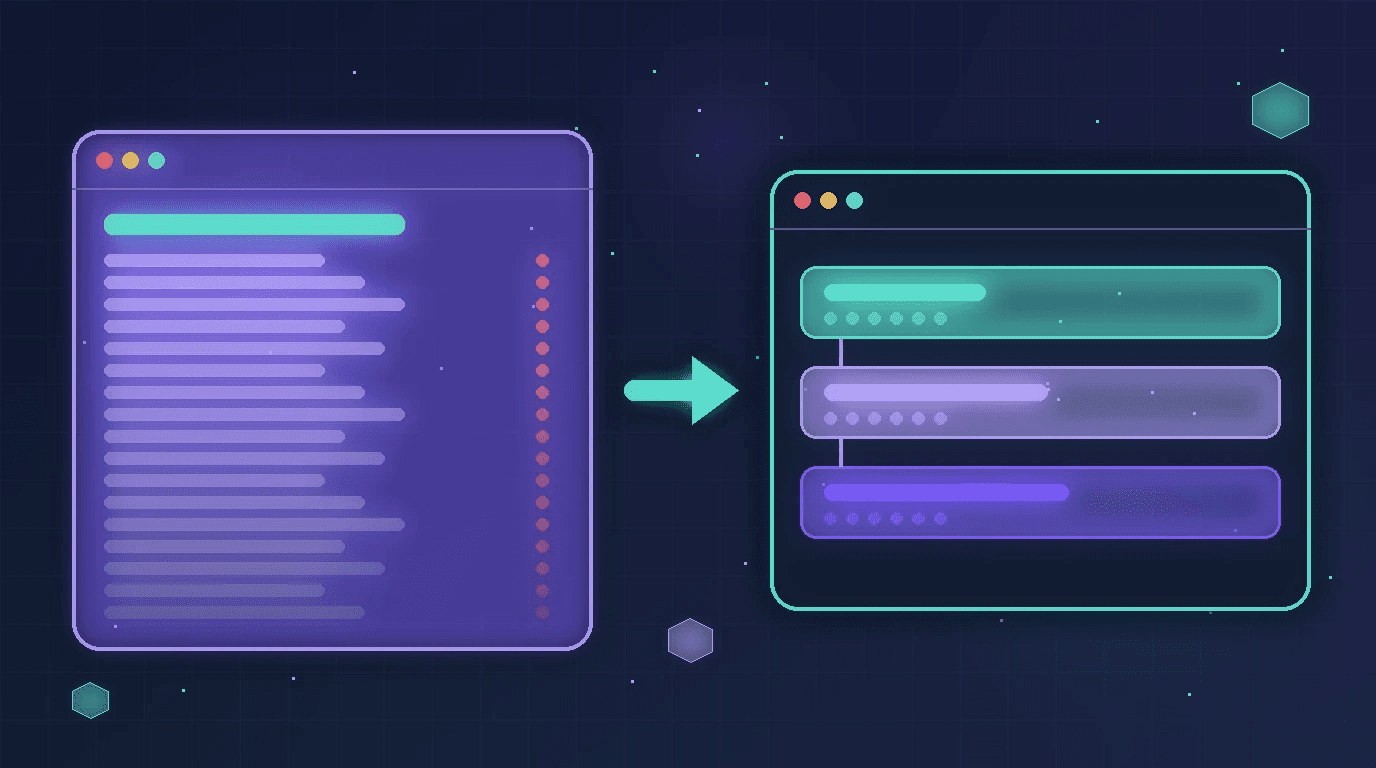
Your checkout form spins for two seconds after “Place order”. The order itself saved in milliseconds. The rest is your CRM sync and a Slack webhook that the customer will never see. Laravel has a one-line fix that most apps never use, and it doesn’t need a queue worker.
TL;DR
defer(fn () => ...)runs a closure after the HTTP response is sent, in the same PHP process. No queue, no worker, no Supervisor.- It only runs when the response status is below 400. Chain
->always()to run it on errors too. - Exceptions inside a deferred closure are reported and swallowed, and nothing retries. Use a real queue for work you can’t lose.
- Already have a job class?
dispatch(...)->onConnection('deferred')gives the same behaviour, and'background'runs it in a separate PHP process.
What defer() is and why most people miss it#
defer() shipped in Laravel 11.23 (September 2024), in the same release as Concurrency and Cache::flexible. It lives in the helpers page under “Deferred Functions”, between dispatch() and Sleep. That’s prime real estate for being skipped.
The idea is simple. You hand Laravel a closure, Laravel sends the response, and only then runs your closure. On PHP-FPM the browser is already rendering the next page while your code talks to the CRM.
use function Illuminate\Support\defer;

Route::post('/newsletter', function (Request $request) {
    $subscriber = Subscriber::create($request->validate(['email' => 'required|email']));

    defer(fn () => $subscriber->syncToMailingList());

    return back()->with('success', 'You are in!');
});
There’s also a global defer() helper, so the use function line is optional. Keep it anyway: it makes the import obvious and avoids a clash with Swoole’s own defer (more on that below).
The usual way vs the gem#
Most apps end up in one of two places: do the work inline and make the user wait, or create a job class and run a queue worker for a 30-line webhook call.
Inline (user waits), then defer() (user doesn't):
public function store(Request $request)
{
    $order = Order::create($request->validate([/* ... */]));

    Http::post(config('services.crm.url').'/contacts', [
        'email' => $order->email,
        'last_order_total' => $order->total,
    ]); // the user waits for the CRM

    Http::post(config('services.slack.orders_webhook'), [
        'text' => "New order #{$order->id}",
    ]); // ...then for Slack. If Slack hangs, so does checkout

    return to_route('orders.show', $order);
}use function Illuminate\Support\defer;
public function store(Request $request)
{
$order = Order::create($request->validate([/* ... */]));
defer(fn () => Http::post(config('services.crm.url').'/contacts', [
'email' => $order->email,
'last_order_total' => $order->total,
]));
defer(fn () => Http::post(config('services.slack.orders_webhook'), [
'text' => "New order #{$order->id}",
]));
return to_route('orders.show', $order);
}We measured it with a closure that sleeps for 2 seconds, behind PHP-FPM 8.4. The client got its response in 0.016 s, and the deferred closure finished 2 seconds later. Same code inline: 2 seconds of spinner.
Here’s how the options compare:
| Option | User waits? | Needs a worker? | Retries? | Best for |
|---|---|---|---|---|
| Inline call | Yes | No | No | Work the response depends on |
defer() | No | No | No | Small, best-effort side effects |
->onConnection('deferred') | No | No | No | An existing job class, same idea |
->onConnection('background') | No | No | No | Slower work that shouldn’t hold the FPM worker |
Real queue (redis, database, SQS) | No | Yes | Yes | Anything you can’t afford to lose |
Real-world example: an Inertia checkout#
This is the full controller from our test app. The Vue side is a normal useForm post: nothing changes on the front end, it just gets its redirect faster.
<?php

namespace App\Http\Controllers;

use App\Models\Order;
use Illuminate\Http\Request;
use Illuminate\Support\Facades\Http;

use function Illuminate\Support\defer;

class CheckoutController extends Controller
{
    public function store(Request $request)
    {
        $data = $request->validate([
            'email' => ['required', 'email'],
            'total' => ['required', 'integer', 'min:1'],
        ]);

        $order = Order::create($data);

        // The customer doesn't care about any of this. Do it after they get their page.
        defer(fn () => Http::post(config('services.crm.url').'/contacts', [
            'email' => $order->email,
            'last_order_total' => $order->total,
        ]));

        defer(fn () => Http::post(config('services.slack.orders_webhook'), [
            'text' => "New order #{$order->id}: {$order->total} cents",
        ]));

        return to_route('orders.show', $order)->with('success', 'Order placed!');
    }
}<script setup lang="ts">
import { useForm } from '@inertiajs/vue3'
const form = useForm({ email: '', total: 4900 })
</script>
<template>
<form @submit.prevent="form.post('/orders')">
<input v-model="form.email" type="email" />
<p v-if="form.errors.email">{{ form.errors.email }}</p>
<button :disabled="form.processing">Place order</button>
</form>
</template>form.processing now flips back as soon as the order is saved, not when Slack feels like answering.


Already have a job? Use the deferred connection#
Since Laravel 12.35 you can push any queued job onto the deferred connection. It runs synchronously, after the response, with no worker. Since 12.37 there’s also background, which runs the job in a separately spawned PHP process so your FPM worker is free for the next request.
SyncOrderToCrm::dispatch($order)->onConnection('deferred');

GenerateInvoicePdf::dispatch($order)->onConnection('background');
Both connections are in the default config/queue.php of new Laravel 13 apps. In an older app, add them yourself:
'connections' => [
    // ...
    'deferred' => ['driver' => 'deferred'],
    'background' => ['driver' => 'background'],
],
Cancel or replace a deferred closure#
Give a closure a name and you can cancel it with forget(). A name is also a cheap debounce: register the same name three times and only the last one runs. We checked that in our test app.
defer(fn () => Search::sync($user), 'sync-search');
defer(fn () => Search::sync($user->fresh()), 'sync-search'); // only this one runs

defer(fn () => Metrics::report(), 'metrics');
defer()->forget('metrics'); // never runsGotchas#
The status code decides. Callbacks run when the final status is below 400. A redirect counts as success, and that includes the 302 Laravel sends when validation fails on an Inertia form. In our test, a closure registered before $request->validate() still ran on a failed submit. Register deferred work after validation, after the thing it reports on actually happened.
Gotcha: Errors disappear quietly
Laravel wraps each deferred closure in rescue(). An exception is reported to your log or error tracker, the response is already gone, the next closure still runs, and nothing retries. That’s fine for analytics. It’s not fine for “charge the card” or “send the invoice”. Those go on a real queue.
php artisan serve makes it look broken. The built-in server keeps the connection open until the script ends, so locally the browser still waits the full 2 seconds. Behind PHP-FPM, Laravel calls fastcgi_finish_request() and the browser is released straight away. Test the speed-up on a real PHP-FPM setup, not on artisan serve.
It still uses your PHP worker. The user doesn’t wait, but that FPM worker is busy until your closure finishes. A dozen 10-second deferred calls under load can starve the pool. Keep defer() for work measured in milliseconds to a couple of seconds, and use 'background' or a real queue for the rest.
background needs to spawn processes. It runs php artisan invoke-serialized-closure in the background, so proc_open must be allowed and the php binary reachable. Some shared hosts block that.
Swoole has its own defer. With the Swoole extension installed, the global defer() can hit Swoole’s function. Import use function Illuminate\Support\defer; and you’re safe.
It works in Artisan commands and queued jobs too. In a command, closures run after it exits with code 0. In a job, they run after the job finishes successfully. Same ->always() escape hatch.
Testing deferred code#
In HTTP tests ($this->post(...)), Laravel terminates the request, so deferred closures do run after the response, just like production. But a closure deferred from a plain service call in a unit test never runs, because there’s no request to terminate. withoutDefer() runs every closure immediately instead, and lets exceptions bubble so your test fails loudly.
Try it yourself
Drop this into a fresh Laravel 13 app next to the controller above and run php artisan test. Both tests pass.
<?php

namespace Tests\Feature;

use Illuminate\Foundation\Testing\RefreshDatabase;
use Illuminate\Support\Facades\Http;
use Tests\TestCase;

class CheckoutTest extends TestCase
{
    use RefreshDatabase;

    public function test_checkout_syncs_the_crm_after_the_response(): void
    {
        config(['services.crm.url' => 'https://crm.test', 'services.slack.orders_webhook' => 'https://hooks.slack.test/x']);
        Http::fake();

        $this->post('/orders', ['email' => 'amina@example.com', 'total' => 4900])
            ->assertRedirect('/orders/1');

        Http::assertSent(fn ($request) => $request->url() === 'https://crm.test/contacts'
            && $request['email'] === 'amina@example.com');
        Http::assertSentCount(2);
    }

    public function test_failed_validation_sends_nothing(): void
    {
        Http::fake();

        $this->post('/orders', ['email' => 'nope'])->assertSessionHasErrors('email');

        Http::assertNothingSent();
    }
}
How useful is this?#
| Score | |
|---|---|
| Time saved per use | ★★★★☆ One line instead of a job class and a worker |
| How often you’ll reach for it | ★★★★★ Every webhook, CRM sync, analytics ping |
| Risk if misused | ★★★☆☆ Silent failures, no retries |
| Overall | 4.5 / 5: a default tool for best-effort side effects |
If your app has a “send to Slack” or “ping the CRM” line inside a controller, you can use this today.
Recap#
defer()runs a closure after the response is sent, with no queue worker.- It runs only for status codes below 400 (redirects included), unless you chain
->always(). - Errors are logged and swallowed, with no retries: keep it for best-effort work.
- Existing jobs can use the
deferredorbackgroundconnections instead. - Measure on PHP-FPM, not
artisan serve, and usewithoutDefer()in unit tests.
FAQ#
Is defer() the same as Inertia::defer()?
No. Inertia::defer() sends a page first and loads a slow prop in a second request (see partial reloads). Laravel’s defer() runs server-side work after the response, and the browser never receives its result.
Does defer() replace my queue?
Only for small, best-effort work. There are no retries, no backoff and no failed-jobs table, and a worker restart loses anything still pending. Emails, payments and anything you must not lose belong on a real queue.
Why does my page still wait locally?
The built-in php artisan serve server keeps the connection open until the script ends. Behind PHP-FPM, Laravel calls fastcgi_finish_request() and the browser is released before your closures run.
Does it run when validation fails?
Yes, if you registered it before validation. A failed validation is a 302 redirect, and redirects count as success. Call defer() after validate().
Which Laravel version do I need?
defer() arrived in Laravel 11.23. The deferred queue connection came in 12.35 and background in 12.37. Everything here was tested on Laravel 13.35.
Next steps#
- Show a queued Laravel job in Vue, for work that needs a real queue
- Inertia partial reloads in Vue, where
Inertia::defer()lives - queue:work in production, listen locally
- Laravel docs: Deferred functions
Sources#
- Laravel 13 docs: Deferred functions
- Laravel 13 docs: Deferred dispatching (
deferredandbackgroundconnections) - Laravel 13 docs: Deferring concurrent tasks
- laravel/framework v11.23.0 release (Laracon 2024 PR #52710)
- laravel/framework PR #57428: Deferred queue (v12.35.0)
- laravel/framework PR #57648: Process queue jobs in background (v12.37.0)
- Source:
InvokeDeferredCallbacksmiddleware